
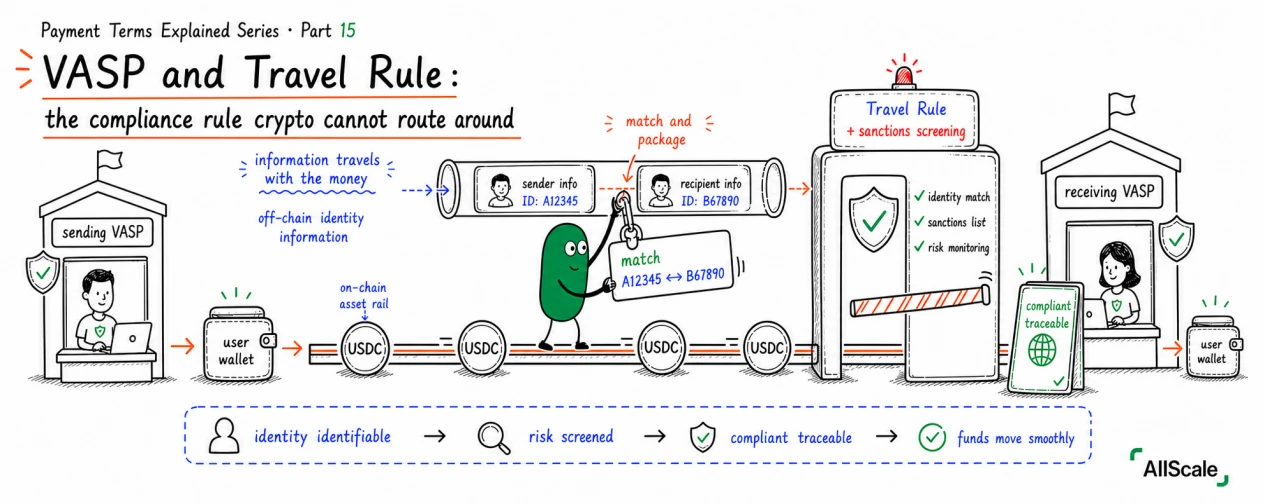
Crypto has one compliance rule that's lifted straight from the old wire-transfer playbook of traditional banking. It technically binds crypto service platforms (the VASPs we'll get to), but the effects land squarely on regular users and merchants.
Plenty of people don't know it exists — until a transfer gets held up, reversed, or their account gets frozen.
The rule is called the Travel Rule. This article walks through what it is, and the VASP concept that's inseparable from it.
1. FATF: Meet the "Rule-Setter"
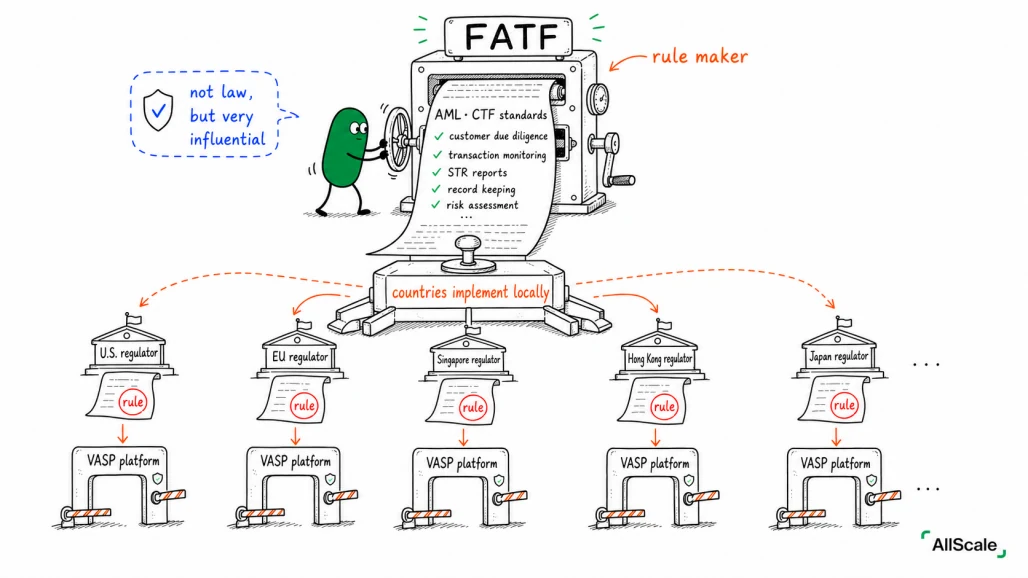
Where do these cross-border compliance standards come from? Mostly from one organization: FATF (Financial Action Task Force), an intergovernmental body that sets global AML and CFT standards.
FATF itself isn't a law, but regulators worldwide draft and enforce their laws based on its recommendations. It doesn't govern you directly, but the practical binding force is strong. You can think of it as the global compliance "rule-setter."
2. VASP: Who Has to Follow These Rules
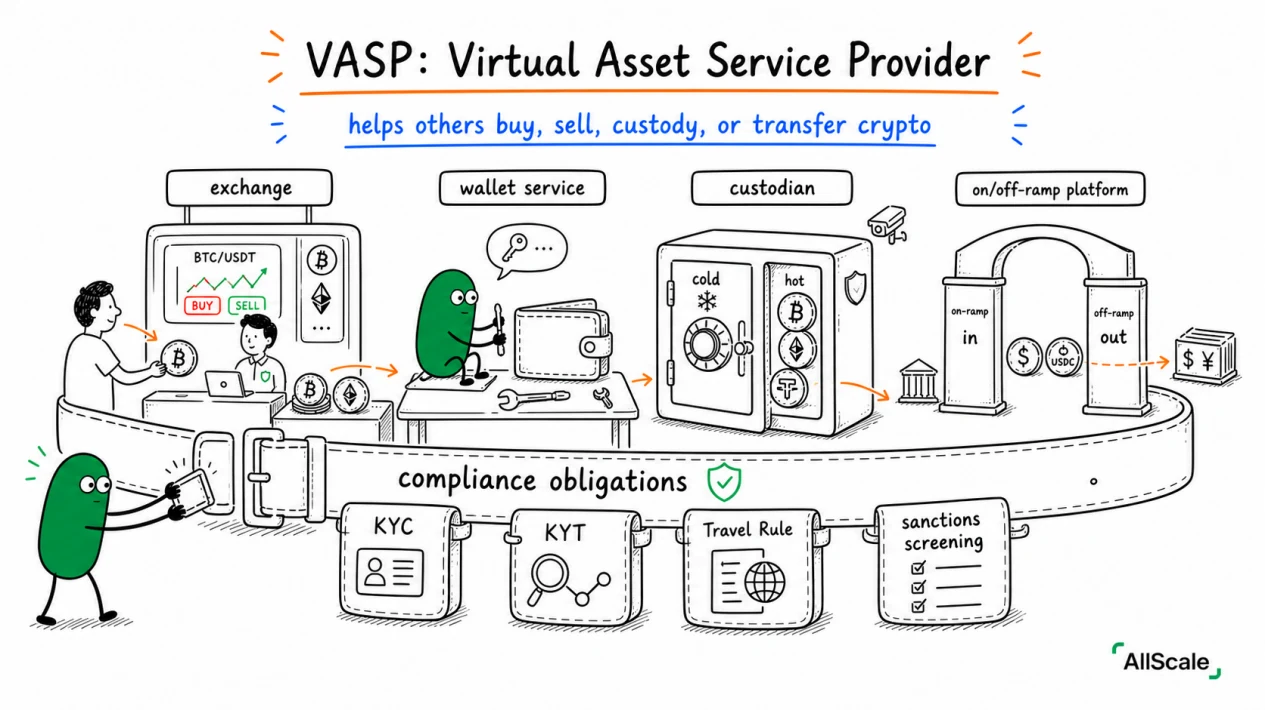
The next term decides who bears the load: VASP (Virtual Asset Service Provider).
It refers to institutions offering crypto-related services — exchanges, wallet providers, custodians, stablecoin on/off-ramp platforms, and so on. Put simply: if you're helping other people buy, sell, hold, or move crypto assets, you're probably a VASP, and you carry compliance obligations similar to those of a traditional financial institution.
3. Travel Rule: The Old Wire-Transfer Rule, Ported On-
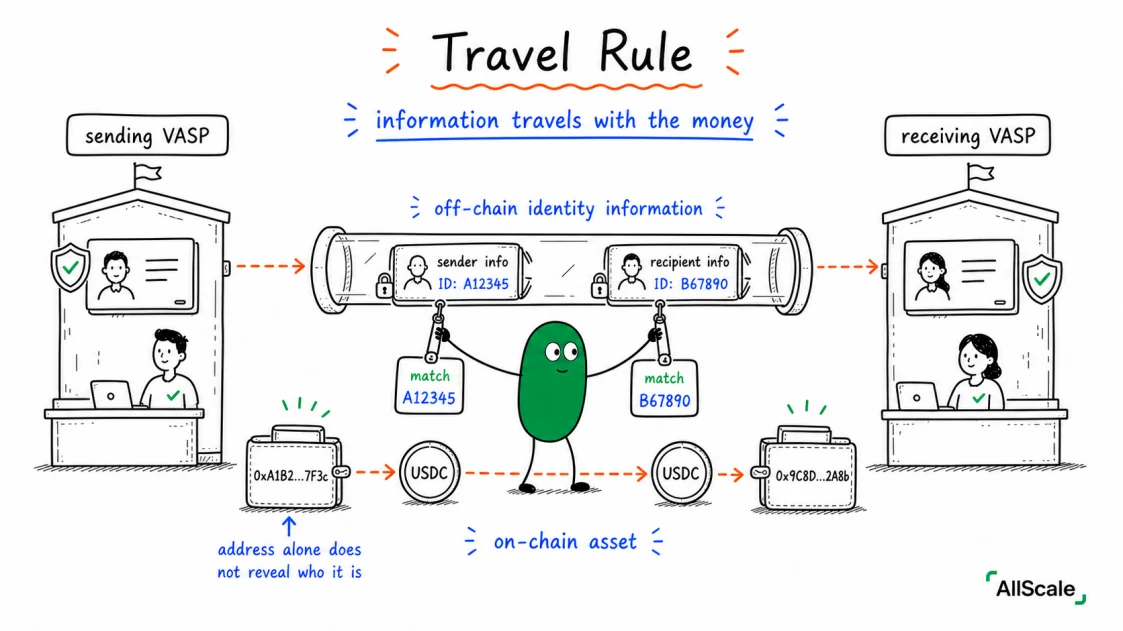
Chain Look at traditional banks first. The law says: when you send a wire, you have to include originator and beneficiary identity information (who's sending to whom) so funds stay traceable and auditable. That information "travels with the money," hence the Travel Rule.
FATF extended this rule into crypto: when virtual assets move between two VASPs and the amount crosses a certain threshold, the sending platform has to pass sender and recipient identity information to the receiving platform.
The tricky part: on-chain addresses are anonymous by nature, just strings of characters that reveal nothing about who's behind them. The Travel Rule forces platforms to build a separate off-chain system for passing identity information so both sides can match records. That's one of the thorniest technical problems in crypto compliance. Sanctions screening usually rides along with it — checking whether counterparties appear on lists like OFAC's.
4. What This Means for a Stablecoin Business
For merchants, it's very concrete: whether the platform you use is a compliant VASP, and whether it actually implements the Travel Rule and sanctions screening properly, directly determines whether your money gets stuck or frozen during transfers or on/off-ramping. When you pick a platform, this deserves a serious look.
For platforms, only by doing this well can you legally operate in multiple countries and regions and connect with banks and mainstream partners. It's both a barrier and a moat.
Compliance has real costs, of course: collecting information, coordinating between platforms, adding a few extra steps for users. What it buys is the ability to run crossborder and stay in business long-term.
AllScale operates under a regulated framework and puts the Travel Rule and sanctions screening in place up front — exactly so merchant funds can move both compliantly and without getting stuck for compliance reasons.
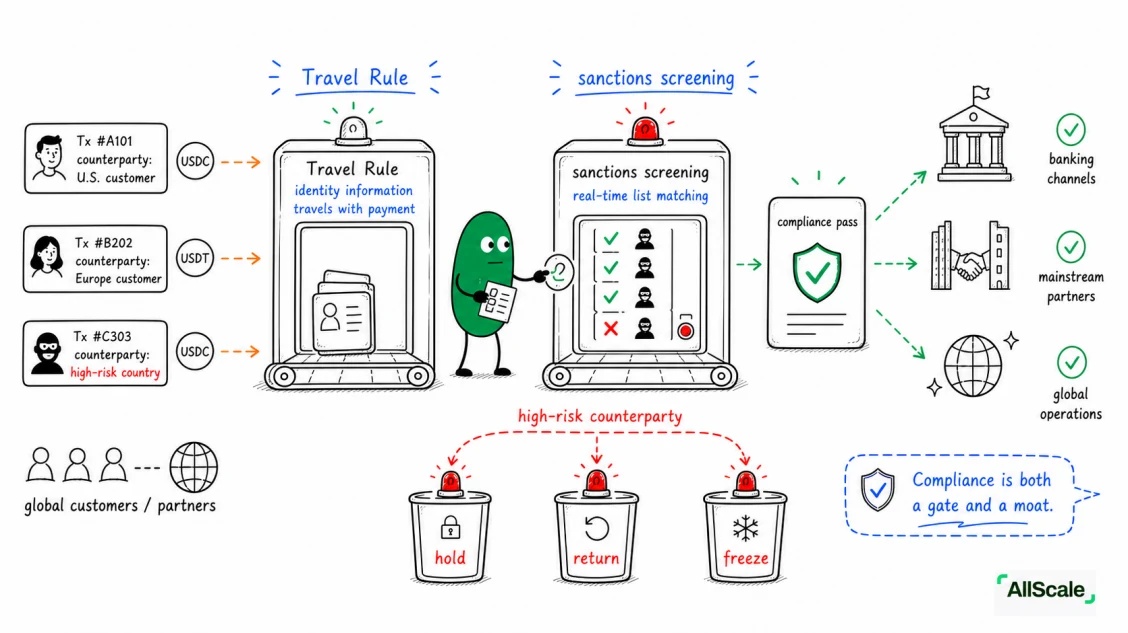
Recap FATF: The international body that sets global AML and CFT standards — the rulesetter.VASP (Virtual Asset Service Provider): Institutions that offer crypto trading, custody, or transfer services, carrying compliance obligations.Travel Rule: When assets move between VASPs, originator and beneficiary identity information has to travel with the money — the old wire-transfer rule, ported on-chain.
In one line: The Travel Rule makes crypto transfers "named and traceable" too. It's a gate stablecoins have to pass through to join mainstream finance.
Next article closes out the whole series: a map of stablecoin and payment licenses across the world's major regions — the US, Europe, Hong Kong, Singapore, Dubai.
What each one issues, how strict they are, and which "passports" you actually need to run a global business.