
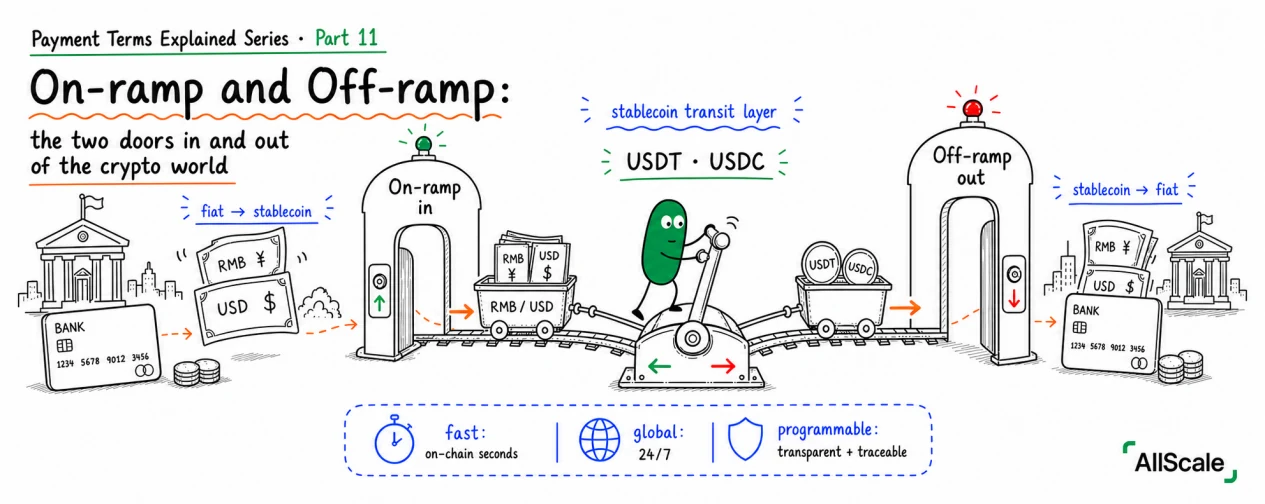
Article 10 explained what a stablecoin actually is. But there's a practical question: your money starts out in fiat like CNY or USD, so you need to turn it into stablecoins to use it. And after you receive payment in stablecoins, if you want to spend it, you have to turn it back.
These two doors, "in" and "out," are what this article is about: on-ramp and off-ramp.
We'll cover OTC in more depth later, this one sticks to the basics.
1. The two doors: on-ramp and off-ramp
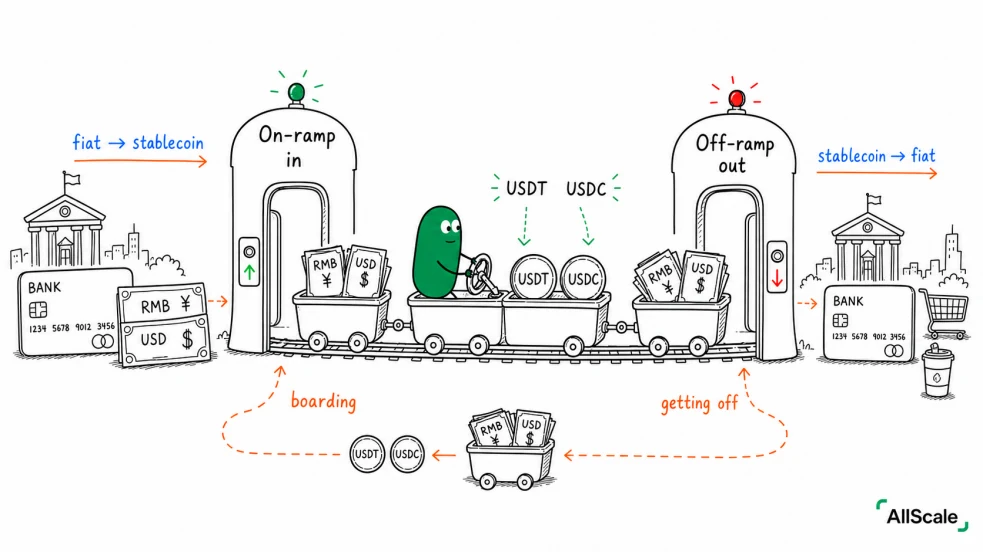
- On-ramp: fiat → stablecoin. You swap fiat for USDT or USDC, "getting on" and entering the crypto world.
- Off-ramp: stablecoin → fiat. You swap USDC back into fiat and withdraw to your bank card, "getting off" and returning to the real world.
Article 8 covered how stablecoins can strip out the layers of FX conversion in a cross-border chain. But the last step, turning the money back into spendable fiat, doesn't go away. It happens at the off-ramp door.
2. Three common channels: CEX, DEX, OTC
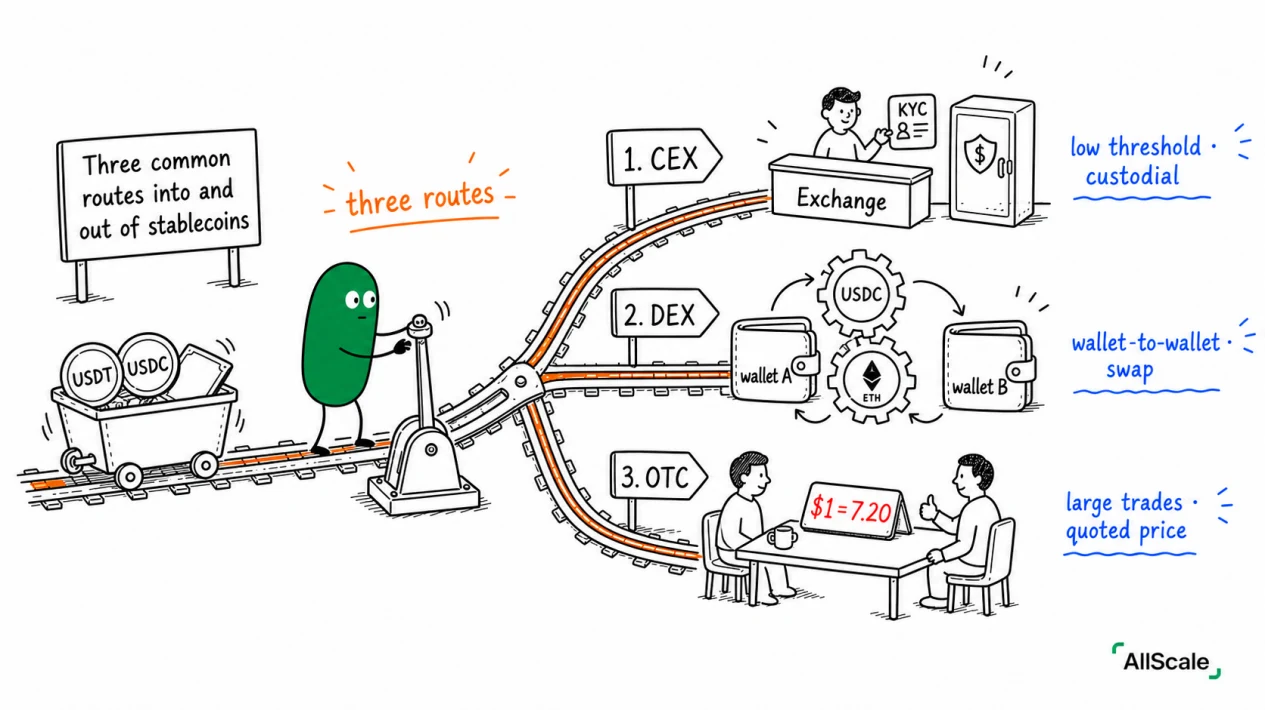
There are three main paths through these doors:
- Centralized exchange (CEX): like Binance or Coinbase. The most common path, somewhere between a money changer and a broker. You register, do KYC, link a card or wire in funds, and you can buy or sell stablecoins. Low barrier, deep liquidity. The trade-off is you hand over your funds and ID to the platform.
- Decentralized exchange (DEX): like Uniswap. On-chain automated swaps, connect your wallet directly, nobody holds your money for you. But mostly it's "coin for coin" (USDC for ETH, say). Actual fiat on/off-ramp still usually routes through a CEX or another fiat channel.
- Over-the-counter (OTC): not on a public exchange order book. Buyer and seller (often via an OTC desk or market maker) negotiate directly and settle large trades. Large on/off-ramps often go this route. You get one price with no order book slippage, but you have to find a counterparty you trust.
3. These two doors are where the real friction sits
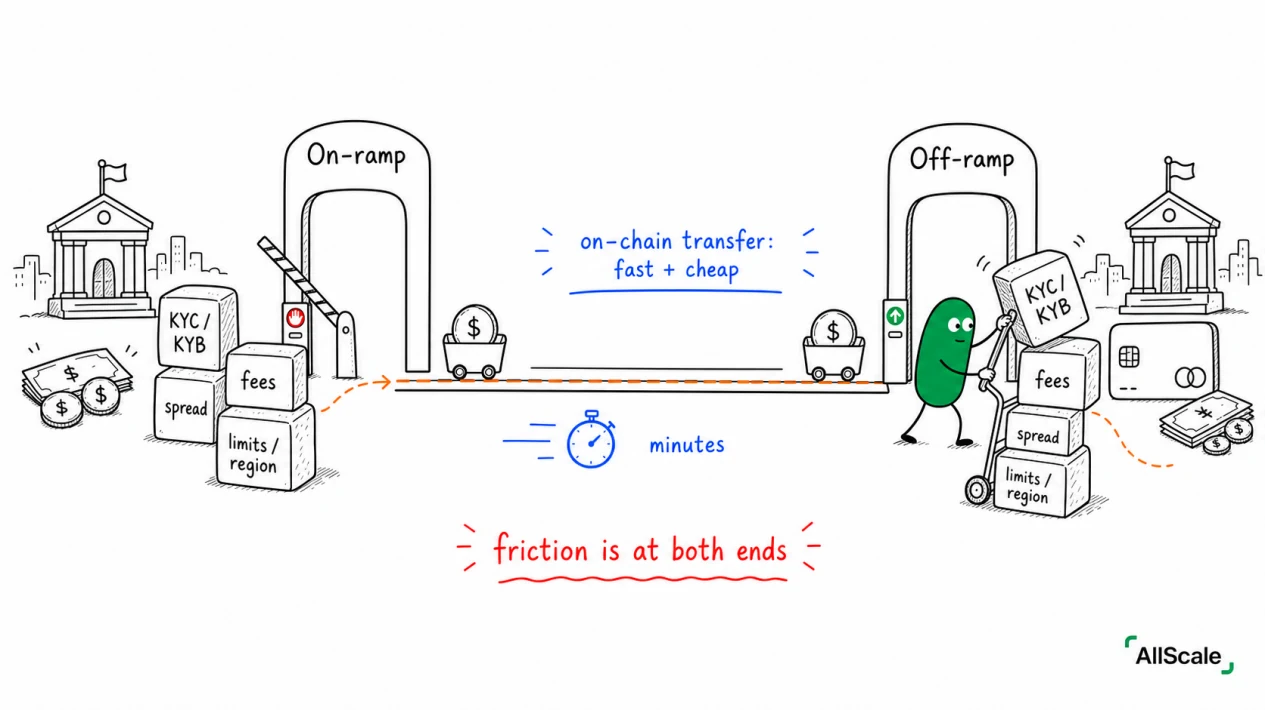
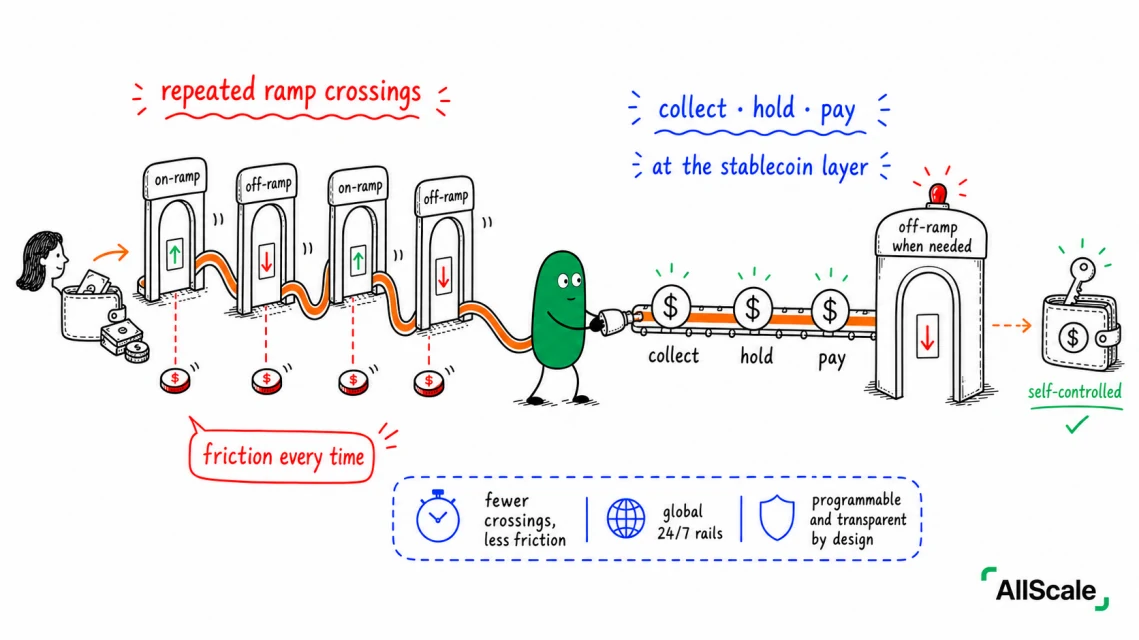
Here's the thing that gets overlooked: on-chain transfers are fast and cheap (see articles 7 and 9), but the on/off-ramp doors are exactly where the friction of traditional finance comes back.
At these doors you usually run into:
- Identity checks: on/off-ramps mostly require KYC/KYB (compliance gets its own treatment in article 14), sometimes with review queues.
- Fees: the channel fee itself, plus the FX spread you can never fully dodge (article 8).
- Limits and compliance rules: the caps and rules vary a lot by region and by channel.
So the "fast and cheap" story of stablecoins mostly plays out in the middle. Once you hit the two ramps, you're back in the rules of the real world. Which is why people say: the longer you stay in stablecoins and the fewer trips you take through the ramps, the better the whole system works.
4. AllScale: fewer trips through the ramps
For a merchant doing cross-border, the ideal setup looks like this: everyday sending and receiving stays in stablecoins (fast and cheap), and you only off-ramp when you actually need fiat.
That's what AllScale ties together: receipts, holding (self-custody), and on/off-ramp channels when needed, so merchants don't ping-pong between the two doors, and don't get forced through multiple on/off-ramps just to handle a single receipt. (Why self-custody matters gets its own article next, number 12.)
Recap On-ramp: fiat into stablecoin, get on. Off-ramp: stablecoin back to fiat, get off. Three channels: CEX (exchange, low barrier but custodial), DEX (on-chain, self-custody but mostly coin-for-coin), OTC (off-market, large size, single price).
One line: on-chain transfers are fast and cheap, but the on/off-ramp doors are where traditional friction returns. Fewer trips through the doors, better overall.
Next article covers a concept that runs through the whole series, and sits at the core of what AllScale does: where your stablecoins actually live and who controls them, that is, custodial vs non-custodial.